ByJohn A
IGBT vs Transistor: Which Power Switching Device Fits Your Application?
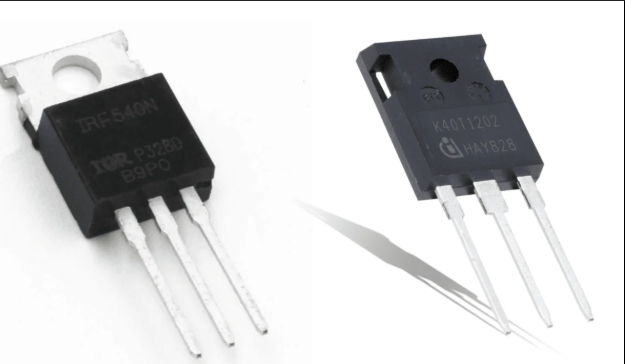
IGBTs and standard power transistors both perform switching functions, but IGBTs are better suited to high-power, high-current applications due to their combination of fast switching and high current-handling capacity, while standard transistors are often more efficient and cost-effective for lower-power switching and amplification applications. Choosing between them depends on the specific voltage, current, and switching frequency requirements of the application, rather than assuming one device type is universally superior.
This guide compares IGBTs and transistors directly, explaining where each performs best and how to decide which fits a given power switching application.
Understanding the Core Difference
An IGBT (Insulated Gate Bipolar Transistor) is essentially a hybrid device, combining characteristics of two other component types. It takes the voltage-controlled, fast-switching gate structure of a MOSFET and combines it with the high current-handling capability of a bipolar transistor. This combination allows IGBTs to manage significantly higher power loads than standard transistors while still maintaining relatively efficient switching performance.
Standard power transistors, by contrast, are generally optimized for lower to moderate power applications, offering solid switching and amplification performance without the added current-handling capacity that IGBTs provide — capacity that, in lower-power applications, often isn’t necessary in the first place.
See also: 7 Days, 7 Unexpected Lessons From A 7 Day Yoga Retreat In India
When IGBTs Are the Better Choice
IGBTs tend to be the preferred option in applications involving:
High-power switching requirements. Applications requiring efficient management of substantial current loads — such as industrial motor drives, inverters, and heavy equipment power systems — generally benefit more from an IGBT’s higher current-handling capacity than a standard transistor would provide.
Moderate switching frequencies with high power demands. IGBTs perform well in applications that require a balance between reasonably fast switching and the ability to handle significant power loads, a combination that’s difficult to achieve efficiently with standard transistor technology alone.
Renewable energy and inverter applications. Solar inverters and similar power conversion systems often rely on IGBTs specifically because they need to manage relatively high power loads efficiently during continuous operation.
For buyers evaluating IGBT options for these types of applications, reviewing available Goodark IGBT products provides insight into how IGBT specifications are typically categorized by voltage, current, and application use case, helping match component selection to specific high-power switching requirements.
When Standard Transistors Are the Better Choice
Standard transistors remain the more practical choice in applications involving:
Lower-power switching or amplification needs. For applications that don’t require managing substantial current loads, standard transistors often provide sufficient performance at a lower cost than IGBT alternatives.
High-frequency switching with lower power requirements. In some cases, standard transistors can offer better switching speed performance than IGBTs when power handling requirements are more modest, since IGBTs are generally optimized to balance switching speed against higher current capacity rather than maximizing switching speed alone.
Signal amplification applications. Where the primary function is amplifying a signal rather than managing significant power loads, standard transistors are typically the more appropriate and cost-effective component choice.
Cost-sensitive, lower-power designs. For applications where power requirements are modest, the added current-handling capability of an IGBT often isn’t necessary, making a standard transistor the more economical option without sacrificing relevant performance.
For applications matching this profile, reviewing available Goodark transistor products provides insight into transistor specifications suited to switching and amplification applications that don’t require an IGBT’s higher power-handling capacity.
Comparing Key Specifications Side by Side
Current handling. IGBTs generally offer significantly higher current-handling capacity, making them better suited to high-power applications.
Switching speed. Standard transistors can sometimes offer faster switching in lower-power contexts, while IGBTs are optimized to balance switching speed with higher current capacity.
Cost. Standard transistors are typically more cost-effective for applications that don’t require an IGBT’s higher power-handling capability.
Thermal performance under high load. IGBTs are generally better suited to sustained high-power operation, given their design specifically for higher current applications.
Application complexity. IGBTs are more commonly used in complex industrial and renewable energy systems, while transistors serve a broader range of general-purpose switching and amplification functions.
A Practical Decision Framework
- Assess power requirements first. If the application involves managing substantial current loads — particularly in industrial or renewable energy contexts — an IGBT is likely the more appropriate choice.
- Consider switching frequency needs. For applications requiring very high switching speeds at lower power levels, a standard transistor may offer better-suited performance.
- Factor in cost sensitivity. For lower-power applications, a standard transistor often provides adequate performance at a more favorable cost point than an IGBT.
- Evaluate thermal and operating conditions. Applications involving sustained high-power operation generally favor IGBTs, given their design specifically for these conditions.
Final Thoughts
IGBTs and standard transistors both serve important roles in power switching applications, but they’re optimized for different use cases. IGBTs excel in high-power, industrial, and renewable energy applications requiring substantial current-handling capacity, while standard transistors remain the more practical choice for lower-power switching and amplification needs. Matching the device type to the specific voltage, current, and switching frequency requirements of an application — rather than defaulting to one component type — leads to more efficient and cost-effective circuit design.
FAQs
What is the main difference between an IGBT and a standard transistor? IGBTs combine fast, voltage-controlled switching with high current-handling capacity, making them better suited to high-power applications, while standard transistors are typically optimized for lower to moderate power switching and amplification.
When should I choose an IGBT over a standard transistor? IGBTs are the better choice for high-power applications like industrial motor drives, inverters, and renewable energy systems that require managing substantial current loads efficiently.
Are standard transistors cheaper than IGBTs? Generally, yes. For lower-power applications that don’t require an IGBT’s higher current-handling capability, standard transistors often provide adequate performance at a more cost-effective price point.
Can standard transistors switch faster than IGBTs? In some lower-power contexts, yes. Standard transistors can offer faster switching speeds than IGBTs, which are generally optimized to balance switching speed against higher current-handling capacity.
Is it common for a single system to use both IGBTs and transistors? Yes. Many industrial and power conversion systems use IGBTs for high-power switching functions alongside standard transistors for lower-power switching or amplification tasks within the same overall design.