
You notice the crack when you bite down, or maybe the tooth has been patched so many times it no longer feels like your own. It hurts a little, then more, then only when you chew, which somehow feels worse because you start planning meals around one side of your mouth. A damaged tooth can leave you stuck between hoping it settles down and worrying you are about to lose it. In many cases, Littleton dental crowns can help protect the tooth and restore its function.
That tension is real. Dental work can feel expensive, time consuming, and easy to put off when the pain is not constant. Still, some teeth need more than a filling. A crown is often the step that protects what is left of the tooth, restores strength, and helps you avoid a bigger problem later. If the tooth is cracked, badly worn, deeply decayed, or weak after a root canal, a crown may be the right fix.
A dental crown protects a tooth that can no longer hold up on its own
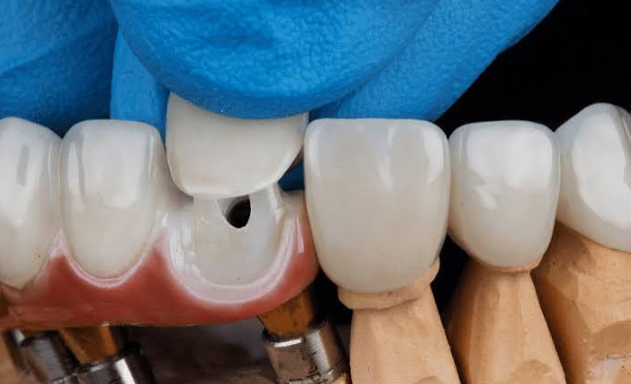
A crown is a custom cap that covers the visible part of the tooth. It is used when the tooth structure is too damaged for a simple filling to do the job. According to the American Dental Association’s guide to dental crowns, crowns can restore shape, size, strength, and appearance.
You may need a crown if a large piece of the tooth has broken off, if a cavity has removed too much tooth structure, or if an old filling keeps failing because there is not enough healthy tooth left to support it. A crown can also be used after root canal treatment, since those teeth often become more brittle over time.
This is where people get tripped up. The tooth may not look terrible from the outside, but hidden cracks or deep decay can leave it one hard bite away from splitting further. Once a crack travels below the gumline, saving the tooth gets much harder. In some cases, it is no longer possible.
Signs a damaged tooth may need more than a filling
A filling works best when the damage is small to moderate and the remaining tooth is still strong. A crown comes into the picture when the tooth has lost too much support. If you have pain when chewing, sensitivity that lingers, visible cracks, a broken cusp, or a tooth that feels weak, your dentist may recommend a crown instead of another filling.
You might also hear this recommendation after repeated repairs. A tooth that has been filled, refilled, and patched again can turn into a cycle of short term fixes. Each repair removes a bit more tooth. At some point, replacing one more section does not solve the real problem, which is that the whole tooth needs reinforcement.
When does a damaged tooth need a dental crown becomes a practical question at that stage, not a cosmetic one. The goal is often to keep the tooth from breaking beyond repair.
Cracks, root canals, and large decay often call for a tooth cap
A cracked tooth is one of the clearest examples. Some cracks are small and only affect the enamel. Others run deeper and flex when you chew, which causes pain and can let bacteria move into the tooth. A crown helps hold the tooth together and reduces the stress from biting.
Root canal treatment is another common reason. After the infected or inflamed pulp is removed, the tooth may stop hurting, but it is not automatically strong again. MedlinePlus explains what happens during root canal treatment and why the tooth often needs restoration afterward. In many back teeth, that restoration is a crown because molars handle heavy chewing force every day.
Large cavities create a similar issue. If decay has hollowed out too much of the tooth, a filling may act like a patch on thin walls. It can fail under pressure, and the tooth can fracture around it. A crown covers and supports the remaining structure.
The difference between a filling and a crown matters when the tooth is under pressure
| Situation | Filling May Work | Crown Is Often Better |
|---|---|---|
| Small to moderate cavity | Yes, if most of the tooth is still strong | Usually not needed |
| Large cavity with thin remaining tooth walls | May fail sooner | Often recommended for support |
| Cracked tooth with pain on biting | Rarely enough | Often used to protect the tooth |
| After root canal on a back tooth | Sometimes temporary only | Common long term restoration |
| Broken cusp or missing large portion of tooth | May not hold well | Usually stronger choice |
| Minor chip on a front tooth | Bonding may be enough | Only if damage is extensive |
The decision is not only about what can be repaired today. It is about what will still be working a year from now when you are chewing normally and not tiptoeing around one side of your mouth. Need a crown for a damaged tooth usually means the tooth has crossed the line from repairable to fragile.
Putting off crown treatment can turn a repair into a loss
This is the hard part. Many people wait because the tooth stops hurting, or because they are hoping to avoid the cost. Pain is not a reliable guide here. A tooth can be badly weakened and still stay quiet until it breaks in a way that cannot be fixed.
If a cracked or heavily restored tooth splits below the gumline, treatment may shift from a crown to an extraction, then possibly an implant or bridge. That is a bigger procedure, more healing, and usually more expense. A dentist is often trying to prevent that chain reaction when recommending a crown.
Three steps to take if you think you need crown treatment
1. Stop testing the tooth. Chewing on a sore or cracked tooth to “see if it is still bad” can make the damage worse. Use the other side of your mouth and avoid hard foods like nuts, ice, crusty bread, and sticky candy.
2. Book an exam before the tooth changes again. Cracks and deep decay do not usually improve on their own. A dental exam and X rays can show whether the tooth can be protected with a filling, an onlay, or a crown, or whether the nerve is already involved.
3. Ask what the crown is preventing. That question gets to the heart of the decision. If the answer is “another broken filling,” that is one level of urgency. If the answer is “the tooth may split and become nonrestorable,” that is a very different one. Understanding the risk helps you make a clear call.
Protecting the tooth now can save you more later
If your tooth feels weak, cracked, or heavily repaired, paying attention now can spare you a much bigger problem later. A crown is often recommended because the tooth is still saveable, not because it is beyond hope. That is the window you want to catch.
If you are dealing with a damaged tooth, schedule a visit with a dentist and get a clear look at what is happening before the tooth has a chance to break further.