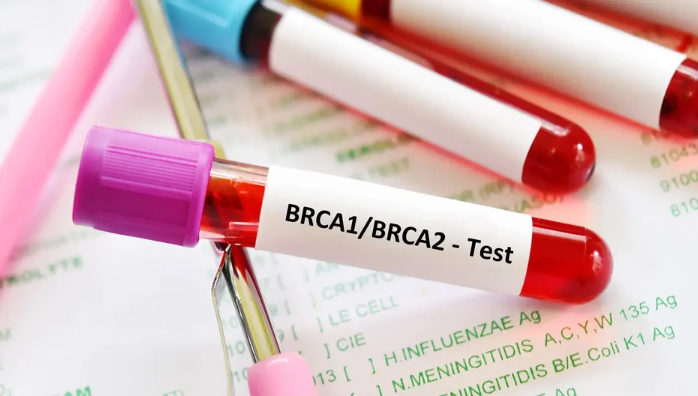

Most breast and ovarian cancers are not caused by genetic factors, but some clusters of these diseases occur because of mutations of BRCA1 and BRCA2 genes. A BRCA genetic test determines whether an individual carries such a gene mutation that increases their cancer risk. The test helps predict predisposition to malignancy and guides the choice of further oncology treatments. This essay will discuss what the test covers, what the results mean, who should take it, and what it does not say.
What the BRCA Gene Test Measures
LifeCell’s BRCA1 & BRCA2 gene analysis helps identify germline mutation carriers to evaluate hereditary breast and ovarian cancer risks and supports oncology treatment pathways. The test looks for mutations in both genes associated with breast, ovarian, prostate, and pancreatic cancer development. The report covers all possible pathogenic variations in BRCA1 and BRCA2. It is recommended for patients who suspect they have a hereditary breast, ovarian, or prostate cancer disposition [1].
Comprehensive analysis of both genes usually involves sequencing and deletion/duplication detection, which covers most mutations [6].
Why BRCA Mutations Raise Cancer Risk
BRCA1/2 genes normally suppress tumor growth, and their mutations eliminate this tumor suppression mechanism, increasing cancer risk. Specifically, LifeCell notes that the genes have a role in DNA repair, so faulty BRCA1/2 is associated with impaired DNA damage response [1].
Lifetime Risk With and Without a BRCA Mutation
The table below shows lifetime risk ranges from one hospital genetics fact sheet. [6]
| Cancer | General population | With BRCA1/2 mutation |
| Female breast | 10–12% | 50–85% |
| Ovarian | 1–2% | 10–60% |
| Male breast | Under 1% | Up to 10% |
These gene variations boost the risks, which depend on the variation and the person’s circumstances [2], but they don’t necessarily signify that someone has cancer [6].
BRCA1 vs BRCA2: How the Risks Differ
Also, genetic variances may boost the probability of having various malignancies, dependent on the kind of mutation. For instance, BRCA1 variation is more frequently linked to breast and ovarian cancer, while BRCA2 variation is associated with prostate cancer [2]. According to the US National Cancer Institute and the National Comprehensive Cancer Network, the chance of developing breast cancer during life spans from 60-72% for BRCA1 and 55-69% for BRCA2 mutation carriers [2].
Ovarian cancer risks are estimated at 39-58% for BRCA1 and 13-29% for BRCA2 mutation carriers [3]. At the same time, prostate cancer chances are 7-26% for BRCA1 and 19-61% for BRCA2 carriers by age 80, compared to an average of 10.6% in the general population [3]. Moreover, a BRCA mutation carrier who has already had breast cancer has a significantly higher likelihood of a second primary breast cancer [3].
What Indian Studies Show About BRCA Mutation Rates
The prevalence of BRCA gene mutations largely depends on the studied population. For instance, a hospital in India examined 395 breast cancer patients referred for germline BRCA testing and found 115 (29%) had BRCA mutations, including 79 (20%) with BRCA1 and 36 (9%) with BRCA2 variations [4].
A multi-centric study across 14 Indian hospitals included 304 newly diagnosed breast cancer patients who volunteered for BRCA testing, and 8.8% had germ line BRCA mutations. The researchers note that previous Indian studies in selected groups reported up to 18.6-36.2% [5]. The discrepancy between these studies highlights the importance of family history.
Who Should Consider a BRCA Gene Test
The test is recommended for individuals who suspect they have an hereditary breast, ovarian, or prostate cancer disposition [1]. An Indian study on breast cancer patients supports the need for BRCA testing for young women, as well as those with a family history of cancer [4].
Consider speaking to your doctor if:
- A number of close family members have experienced prostate, ovarian, or breast cancer
- A relative was diagnosed at a young age
- You have had breast cancer and want to understand your risk of another
- A family member has already tested positive for a BRCA mutation
A genetic counsellor can decide which test suits your personal and family history. [6]
Why a BRCA Mutation Matters to Your Whole Family
BRCA gene mutations are inherited, so family members share the same risks. In particular, if one child has the mutation, other siblings have a 50% chance of having it as well [3]. In this case, single site testing is sufficient for other family members, as it only needs to cover the particular BRCA variation found in one of the siblings [6].
What Happens After a Positive Result
A positive test outcome means that an individual has a higher cancer risk rather than indicating immediate cancer development [6]. Furthermore, a positive result does not necessarily mean that the patient needs to take the same course of treatments. According to one clinical practice guideline, the National Comprehensive Cancer Network recommends bilateral salpingo-oophorectomy at a certain age, which is 35-40 years for BRCA1 and 40-45 years for BRCA2 mutation carriers [3]. However, the choice of treatments and follow-up actions largely depends on the individual’s age, family planning, and general health considerations. In particular, it is helpful to discuss genetic counseling and further steps with a physician.
In addition, it is important for BRCA mutation carriers to understand that their oncology care plans may require more frequent screening and surveillance. LifeCell notes that the BRCA1 & BRCA2 test supports oncology treatment pathways [1].
Limits of the Test
There are other genetic variables that may contribute to breast and ovarian cancer, but the BRCA test only looks at two genes. In particular, some gene variations associated with these malignancies have a lifetime risk of breast cancer of over 50% [2]. In addition, some reports include variants of uncertain significance, which do not yet have enough information on their impact [4]. Therefore, it is important to consult with a physician about additional tests that may be necessary.
Key Takeaways
- The BRCA gene test looks for harmful variations in BRCA1 and BRCA2 genes [1].
- These mutations are associated with an increased cancer risk, which can be particularly severe for breast and ovarian cancer [2].
- A positive test result shows that an individual has a higher cancer risk than average, which has implications for their families [3].
- The main reasons for taking the test include a family history of cancer and young age at diagnosis [1] [4].
- Although such a test is informative, it is essential to consult with a physician or genetic counselor before making medical decisions based on test results [6].
References
- LifeCell Diagnostics, BRCA1 & BRCA2 Gene Analysis (ONCO): https://www.lifecell.in/product/health-check/brca1-brca2-gene-analysis-onco
- Breastcancer.org, BRCA Genes and Breast Cancer: https://www.breastcancer.org/genetic-testing/brca
- Breastcancer.org, Test Results for BRCA1, BRCA2, and Other Gene Mutations: https://www.breastcancer.org/symptoms/testing/genetic/variants
- Prevalence and pattern of BRCA1 and BRCA2 mutations in Indian breast cancer patients, Journal of the Egyptian National Cancer Institute family journal (JMHG), 2024: https://jmhg.springeropen.com/articles/10.1186/s43042-024-00567-6
- ESMO Congress 2023, Prevalence of BRCA1 and BRCA2 mutation among Indian breast cancer patients (abstract 372P): https://oncologypro.esmo.org/meeting-resources/esmo-congress-2023/prevalence-of-brca1-and-brca2-mutation-among-indian-breast-cancer-patients-a-multicentre-cross-sectional-study
- Massachusetts General Hospital Cancer Center, BRCA1 and BRCA2 Genes: What You Need to Know: https://m.massgeneral.org/assets/MGH/pdf/cancer-center/genetics/brca-fact-sheet.pdf