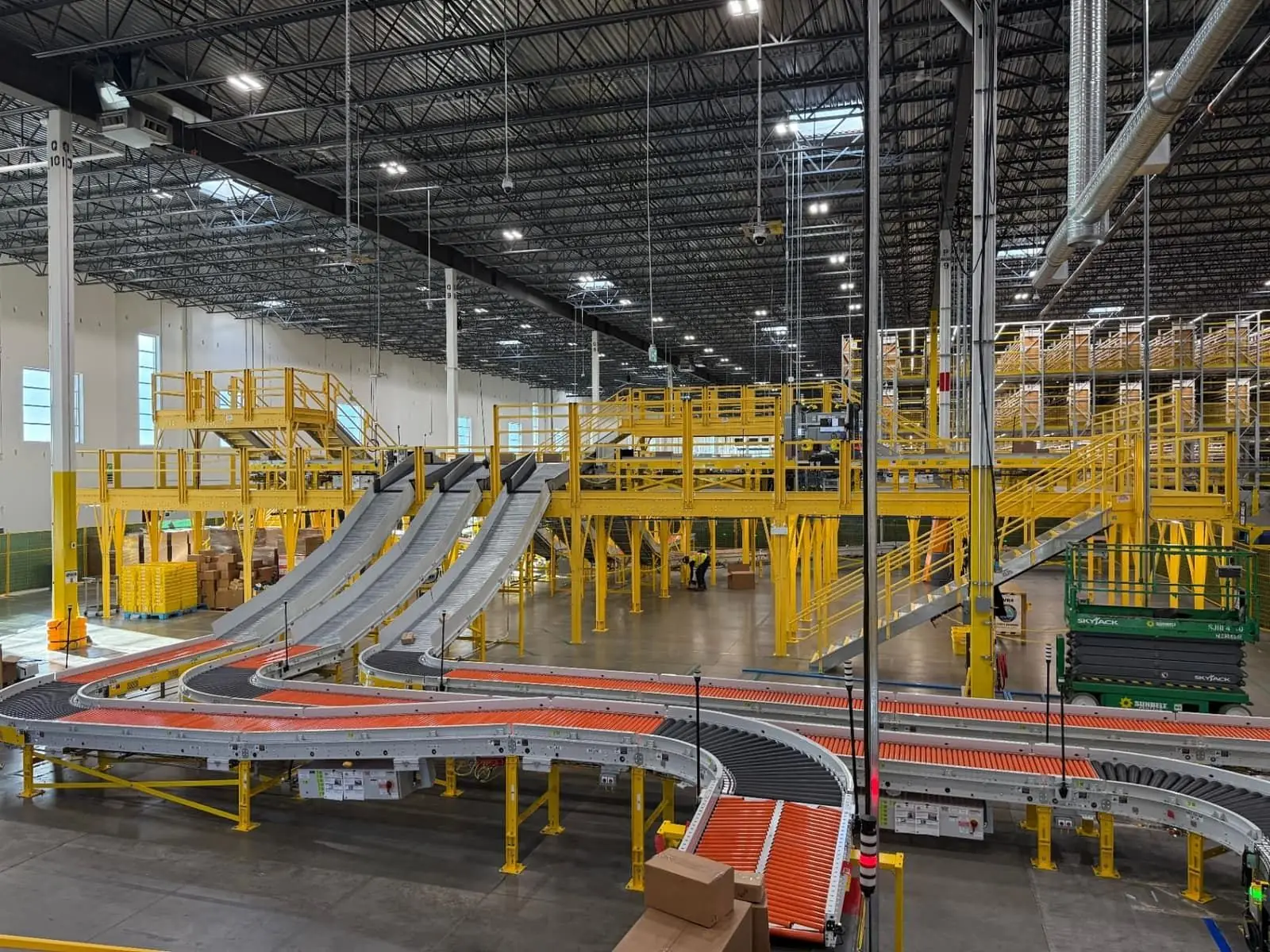

A lot of warehouses pick their automation technology first and their provider second, and that is usually backward. AutoStore and shuttle systems both work, but the same system installed by a strong ASRS company and a mediocre one can turn into two very different investments. The hardware is rarely what goes wrong. Throughput promises, software integration and the first winter of service calls are where projects get difficult.
Before you can judge a provider, you need to know which kind of system your operation fits. So the first half here is about the machines, and the second half is about the people who will sell, build and service them.
How the two systems actually work
AutoStore is a cube. Bins are stacked in a dense grid, and robots drive across the top, lifting bins up and carrying them to ports where people or machines pick items. Nothing moves inside the grid except bins, so almost every cubic foot holds inventory instead of aisles.
A shuttle ASRS works more like a very fast, very organized rack. Shuttles run on rails inside the racking, usually one or more per level, and lifts at the end of the aisle move totes or cartons between levels and the pick stations. Pallet versions exist too, with heavier shuttles and taller structures.
AutoStore itself does not sell and install systems to end users. Certified partners do, which is why the autostore provider you choose shapes the project more than the hardware does.
Where AutoStore wins
Small items in high SKU counts are its home turf. Think e-commerce, spare parts, health and beauty, electronics, and any operation where thousands of items fit in a plastic bin. Density is the main selling point, since the grid can hold several times what shelving would in the same footprint.
It also scales in a way that suits growing businesses. You can add robots to raise throughput, and add bins or extend the grid when storage runs short, without shutting the operation down for months. Grids can be fit around columns and odd building shapes, which helps a lot in older buildings.
The limits are real though. Everything has to fit in a bin, so long, heavy or awkward items stay outside the system. Throughput depends on the number of ports and robots, and a grid with too few ports becomes a bottleneck no matter how many robots you buy. And because it is a dense structure sitting on your slab, floor flatness and fire protection need attention early.
Where shuttle ASRS wins
Shuttle systems earn their place when volume is high and items vary in size. Cartons, totes and cases of different dimensions are fine, and so are pallets with the right design. Throughput per aisle can be very high, and the system can buffer and sequence orders for outbound, which matters to grocery, retail replenishment and distribution centres feeding stores.
They also use height well. If your building has a clear height of 30 feet or more, a shuttle system can use almost all of it, while a typical AutoStore grid is a lot shorter than what a rack-based design can reach. Tall buildings often push buyers toward shuttles for that reason alone.
The downside is cost and rigidity. Shuttle systems are usually more expensive to build, take longer to install and are harder to change once the structure is up. Adding capacity often means adding an aisle or a level, which is a bigger move than adding a few robots.
Building, floor and fire code
Both systems care about your building more than the brochures admit. AutoStore needs a very flat, strong slab and a clear plan for fire suppression inside and around the grid. Shuttle systems tend to be rack-supported, so structure, anchoring and seismic design become the issues, along with slab loads at the uprights.
Ask any provider whether they have handled a building like yours, with the same ceiling height, column spacing and sprinkler setup. If they have only worked in new, purpose-built boxes, a retrofit in a 1990s building will surprise them.
The integrator matters more than the box
Here is the part that gets buyers in trouble. The ASRS itself is only one piece. Around it you need conveyors, packing stations, labeling, controls, electrical, platforms, WMS integration and often building modifications. A warehouse automation systems integrator that manages all of those pieces keeps one team accountable when something does not line up.
A warehouse automation company that only sells the machine hands you the coordination problem. You end up managing the electrician, the conveyor vendor, the software team and the racking contractor yourself, and every delay becomes somebody else’s fault.
Software deserves its own look. Ask who owns the connection between the AutoStore or shuttle controller and your WMS, and who fixes it when an order sits in limbo at 4 p.m. on a Friday. Many projects slip at this step, and it rarely shows up in the proposal as a line item.
Sometimes the answer is both
Plenty of operations end up with a mix. AutoStore handles the small, fast-moving items, while a pallet shuttle or conventional racking holds bulk stock and slow movers. The two feed each other, with replenishment moving from the pallet side into the bins. A provider that can design both sides avoids the standoff where each vendor blames the other for a slow replenishment cycle.
This is also where you find out whether your provider is selling a system or solving a problem. Providers with a single product tend to see every warehouse as a fit for it. Providers with several options ask more questions and talk less.
What to ask before you sign
Ask for a simulation built on your real order data, not a generic one. A good provider will take twelve months of orders, model your peak week and show you throughput, port utilization and where the system backs up. If they can only show averages, the system will look great right up until the Monday after a promotion.
Ask for references with a similar profile. A provider with ten great AutoStore installs in apparel e-commerce is not automatically the right one for a parts distributor with heavy items. Call two references and ask what went wrong, not what went well.
Ask where the spare parts are and who services the system. Robots and shuttles break, and a two week wait for a part from overseas hurts when the system is your only picking method. Look for local technicians, stocked parts in Canada and a service agreement with response times in writing.
Ask what happens when the system is down. Whether the answer is a manual fallback, a redundant lift or a spare robot pool, you want to hear it before go-live, not during the first outage.
Cost, timelines and honest trade-offs
Neither system is cheap, and the lowest quote usually leaves something out. Compare proposals line by line to see which ones include conveyors, controls, installation labour, commissioning, training and the first year of support. A quote that looks much lower is often missing the piece you discover halfway through installation.
Plan for many months between a signed contract and full operation, with design, permits and equipment lead times taking up most of that. AutoStore projects can move faster in a smaller footprint, while large shuttle systems with building changes take longer.
Staffing changes with either choice, but it does not disappear. You walk less and pick more, yet you still need people for exceptions, replenishment, maintenance and the manual areas around the system. Plan training before go-live, not after.
A fair rule of thumb is that AutoStore is the safer first step when your inventory is mostly small items and your growth is uncertain, since it can grow in pieces. If you already know you have high, steady volume and a tall building, a shuttle system is worth the extra complexity.
Red flags in a provider
Be careful with anyone who quotes before seeing your data, avoids talking about service, or says every problem fits their preferred system. A good provider will tell you when AutoStore is wrong for you, and when a shuttle system is more than you need. Some of the best advice you can get is a provider talking themselves out of a sale.
Pressure to sign before the simulation is finished is another one. Automation projects get more expensive with every change order, and the time to find disagreements is before the contract, not after.
If you are weighing AutoStore against a shuttle design and want a straight answer based on your own order data, get connected with a team that can model both and show you where each one breaks.