
All brand messages consist of symbols, be it the color of the packaging, the attitude shown in the advertising, the choice of a word over a synonym, and the design of the logo. All have a meaning associated with them. Audiences will decode this meaning automatically and quickly, using their cultural understanding. If the decoding works, no one will notice. If it doesn’t work, you will have a case study that gets taught to future marketers. Brands can use semiotic analysis to ensure they have the best odds of succeeding.
What is Semiotic Analysis?
Removing the jargon, semiotic analysis is simply looking at each element of the message and asking:
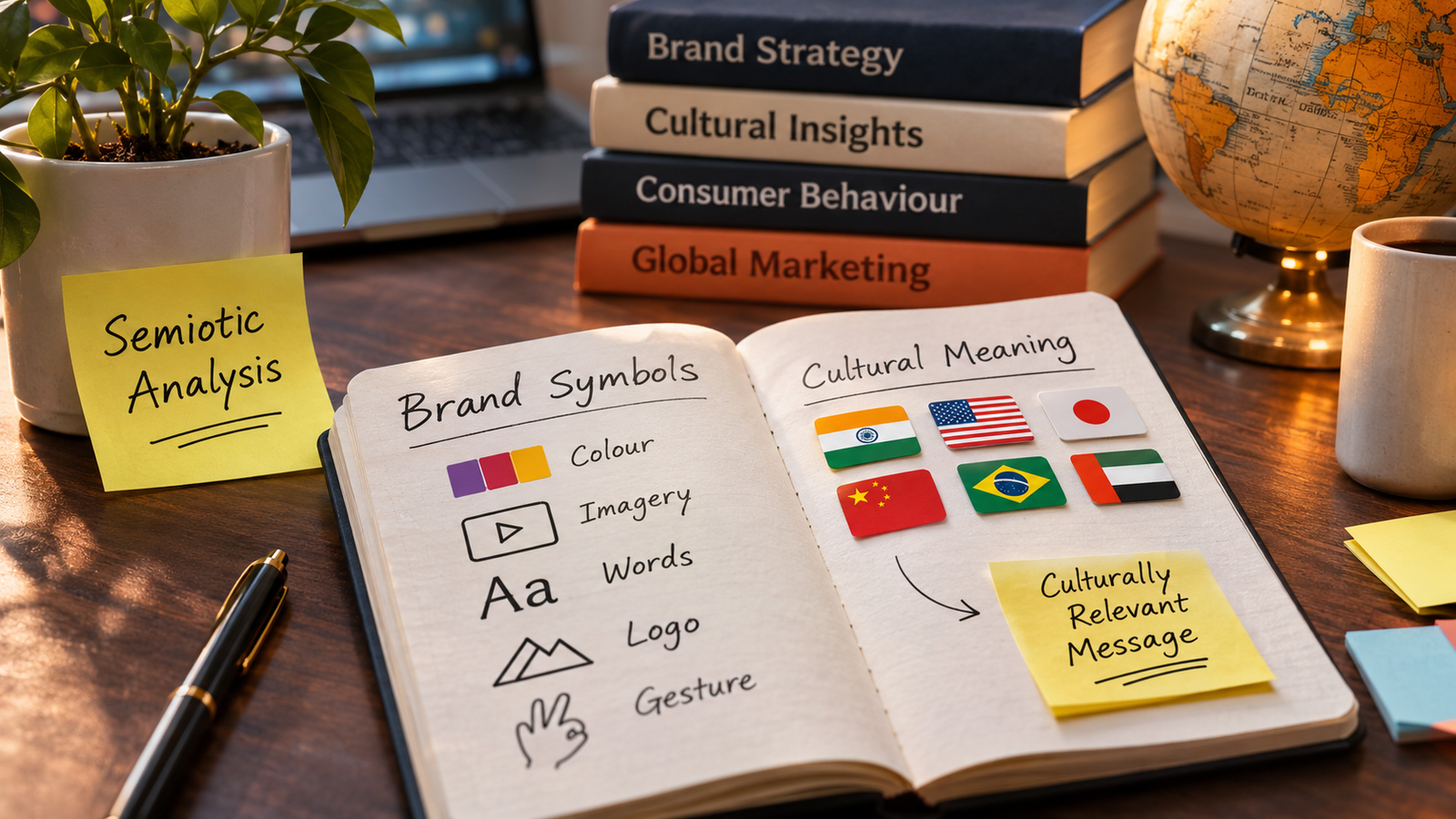
What does the sign represent literally? What is the cultural meaning attached to the sign? How does the meaning change between audiences?
The first two points are basic, but the third is where semiotic analysis comes into play. The meaning of symbols isn’t consistent across audiences. It can change between generations, regions, and even subcultures. A symbol with strong meaning for one group could have no meaning, be ironic, or even mean the complete opposite for another. Semiotic analysis should be used alongside generational research to understand how meaning changes with age.
How Semiotic Analysis Helps Brands Communicate Across Cultures

- Why Campaigns Fail
Most expensive marketing failures are not due to the lack of creativity but the inability to translate the message effectively. Gestures can be interpreted as friendly in one market, but dismissive in another; colors can mean luxury in one culture and mourning in another. Humorous moments can be seen as endearing in one location but smug in another.
Even if you have small issues with your campaign, not huge cultural mistakes, you will still cause damage. The campaign will succeed in all areas, except it won’t ever resonate with your desired audience. This is where semiotic analysis will help.
- Category Codes
Each category of product has its own set of visual and verbal codes. Luxury brands will be very subtle; budget brands will be loud. Financial services will feature handshakes, and beverages will feature condensation and golden hour. These codes become second nature to teams.
This can be both a good and bad thing. Following category codes ensures your brand is readable; audiences will know exactly what type of product you are offering. However, it can lead to your brand becoming generic. Semiotic analysis can ensure you know what codes you need to follow to stay credible and which codes you can deliberately break. Usually, the brands we remember are those that have broken category codes intentionally. Those that have broken codes unintentionally will look confused.
- When to Use It
It is more important to use it at the right time. Adding it at the end will simply be a rubber stamp, and everyone knows it. To gain real value, it should be used early in the process. At a brief stage.
Using external experts will help add value. Internal teams will have become ingrained with category codes and brand myths, making them the worst people to ask how your symbols will be perceived. Experts, such as those offering cultural insights services, will be removed from any brand assumptions. They will know how meaning changes between markets. They will also add value by giving you feedback that your favorite symbol means something else.
- Using It to Influence Creative Decisions
If you utilize semiotic analysis, you should get some tangible outputs from it. For example:
“This color palette will be seen as a premium brand by our target audience.” “This color palette will be seen as a discount brand.” “This imagery will be seen as authentic.” “This imagery will be seen as generic stock imagery.” “This word has connotations in this region; use an alternative.” “This gesture can be used safely in these markets.”
Some of these decisions will be made at a detailed level, so it is important to pass them on to those writing the copy and selecting imagery. A brand comms agency that uses semiotics will treat every headline, visual, and tone of voice as a sign. They will ensure they are testing them against cultural reality.
- Make it a Sustainable Practice
A semiotic analysis will only help with one campaign. However, if you utilize semiotics within your practice, you will have a living document showing what category codes you have, what meanings are important to your audiences, and how meaning changes between regions and generations. As culture changes, this should be updated. Meaning can often change quicker than brand guidelines. A symbol that was safe to use during your last brand refresh can have a new meaning attached to it quietly through meme cycles.
End Point
Using semiotic analysis is not an academic exercise. It is managing the risk of meaning. All brand messages use symbols. Audiences will decode them using their cultural understanding. Teams that analyze cultural understanding before launch save money on fixes, prevent campaigns from failing, and occasionally find the one code they can deliberately break to make the campaign memorable. Meaning is the only thing you are selling, so it makes sense to analyze how it’s received.