ByJohn A
What Makes Italian Nonstick Cookware Different? A Guide to Materials, Craftsmanship, and Performance
Italian nonstick cookware is often associated with careful manufacturing, refined construction, and attention to cooking performance. Country of manufacture alone does not determine whether a pan is good, though. Materials, the way the cooking surface is built, the base design, heat response, and maintenance requirements all have a direct effect on how cookware performs.
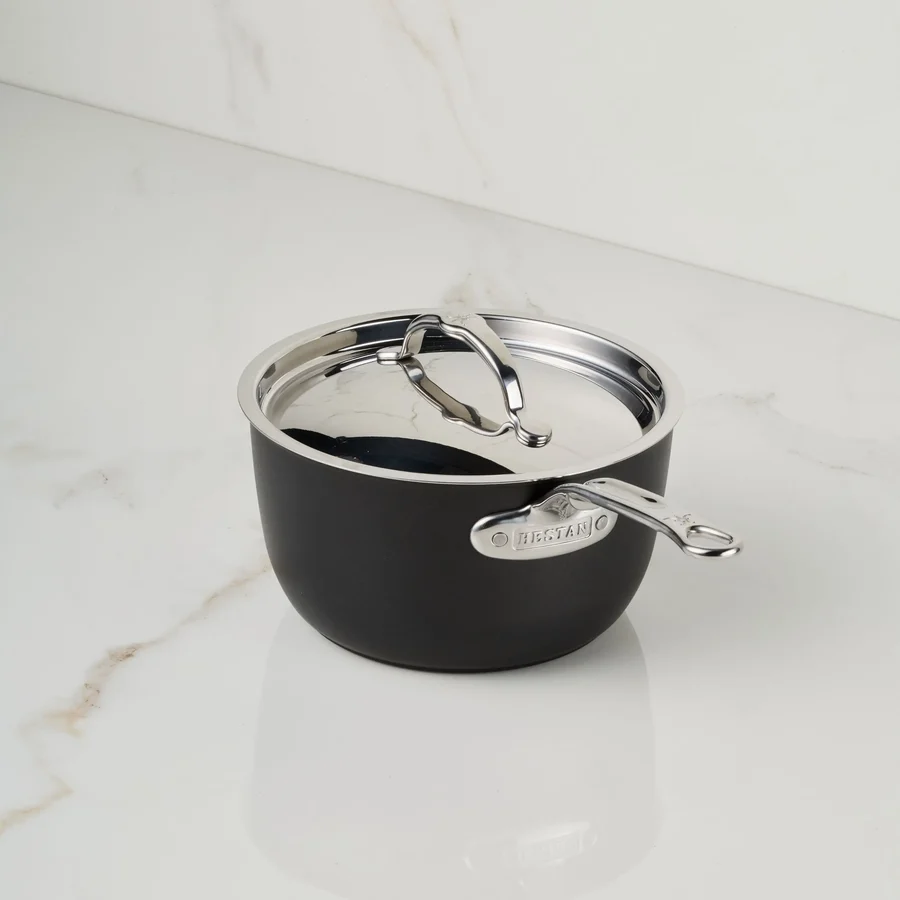
The TITUM Fusion collection provides a useful example of how these elements can be combined. Its cookware is handcrafted in Italy and uses a diamond and titanium reinforced nonstick surface with a patented Double Impact Base. The construction is designed to keep the pan flat, distribute heat consistently, and support browning while retaining the convenience expected from nonstick cookware.
For shoppers researching Italian nonstick cookware, understanding the construction behind the label makes it easier to judge quality beyond appearance or country of origin.
What Is Italian Nonstick Cookware?
Italian nonstick cookware refers to cookware manufactured in Italy that combines a metal body with a nonstick cooking surface. The exact materials and construction can differ considerably between products. Some pans use aluminum for responsiveness, while others combine multiple metals or incorporate a separate bonded base.
The nonstick layer also varies. Its durability depends on the coating system, reinforcement, application process, and how the pan is used and maintained.
Understanding Italian Cookware Manufacturing
Manufacturing methods influence the consistency, strength, and finish of cookware. A well-built pan requires more than a nonstick layer applied to a metal body. The cooking surface needs to work with the underlying structure so that the pan remains stable and responds predictably to heat.
TITUM Fusion cookware is handcrafted in Italy using lightweight aluminum construction paired with a Double Impact stainless steel base. The manufacturer states that its Italian factories draw on two decades of engineering expertise. The result is a design focused on both responsiveness and structural stability.
The collection also uses flush rivets, which reduce areas where food can collect and make the cookware easier to clean and stack.
Why Country of Manufacture Matters to Some Shoppers
For some buyers, Italian production represents a preference for established cookware manufacturing and craftsmanship. It can also provide useful information about where a product is made, particularly when a manufacturer openly identifies its production facilities and construction methods.
Still, “made in Italy” should not be treated as a performance specification by itself. A better assessment considers the materials, base, coating, heat compatibility, warranty, and care requirements alongside the manufacturing location.
What Should You Look for in Italian Nonstick Cookware?
A nonstick pan should be judged as a complete piece of cookware rather than by its coating alone. The body, base, cooking surface, handles, and compatibility with different cooktops all influence daily performance.
Cookware Materials
Aluminum is commonly valued in cookware because it responds quickly to changes in heat. That responsiveness can make temperature adjustments easier during cooking.
TITUM Fusion uses lightweight aluminum with a bonded stainless steel base. This combination is intended to provide the quick response associated with aluminum while adding stability and warp resistance through the base.
The cooking surface is reinforced with diamond and titanium particles. According to the manufacturer, this construction provides 22 times more durability than conventional nonstick coatings.
Nonstick Surface Construction
The surface is central to the cooking experience. A useful nonstick system should provide reliable food release while remaining durable enough for regular use.
TITUM Fusion uses a diamond and titanium reinforced nonstick surface. The manufacturer describes it as FDA-approved PTFE nonstick and designed for repeated cooking use. The surface is also intended to support searing and browning rather than limiting the cookware to low-temperature cooking.
This distinction matters because a nonstick pan can be convenient without sacrificing the ability to develop color on food.
Base and Heat Distribution
The base affects how efficiently heat moves through the pan and how stable the cookware remains on the cooking surface.
The Double Impact Base uses two stainless steel discs bonded to an aluminum body. Its purpose is to help the cookware stay flat, resist warping, and keep oil centered during cooking. The construction is also induction compatible, giving the cookware broader cooktop compatibility.
What Are the Benefits of Premium Italian Nonstick Cookware?
Premium construction becomes most noticeable during repeated use. The value is not limited to the appearance of the cookware. It can affect food release, cleaning, heat response, and how consistently a pan performs over time.
Cooking Convenience
Nonstick cookware reduces the need for excessive cooking fat and makes delicate foods easier to handle. A responsive aluminum body can also help the pan react quickly when the heat level changes.
TITUM Fusion cookware is available in several skillet sizes, from an 8-inch egg pan to larger 12-inch skillets. The collection also includes saucepans, an essential pan, a stockpot, and a wok, allowing the same construction approach to cover different cooking tasks.
Food Release and Cleanup
A smooth nonstick surface can simplify both cooking and cleaning. Food is less likely to adhere firmly to the cooking surface, reducing the amount of scrubbing required after use.
The flush rivet design also helps here because there are fewer exposed areas where residue can accumulate. The cookware is dishwasher safe, although appropriate care can still help preserve the nonstick surface over its useful life.
Everyday Versatility
Good nonstick cookware should handle more than one narrow category of food. The TITUM Fusion collection is designed for searing, browning, sautéing, frying, simmering, and other everyday cooking tasks.
The cookware is oven safe up to 500°F and compatible with induction cooktops. That combination expands its usefulness beyond stovetop-only preparation.
How Does Italian Nonstick Cookware Compare With Other Options?
No single cookware material performs identically across every cooking task. Comparing construction rather than relying on labels gives a clearer picture of what a particular pan offers.
Italian vs. Conventional Nonstick Cookware
Conventional nonstick cookware can provide easy food release, but construction quality varies widely. Less durable pans may have simpler coating systems or bases that are more susceptible to distortion.
TITUM Fusion takes a different approach by combining reinforced nonstick technology with a stainless steel Double Impact Base. The manufacturer claims the surface is 22 times more durable than conventional nonstick coatings, while the base is designed to resist warping.
Italian vs. Stainless Steel Cookware
Stainless steel is valued for durability, high-heat cooking, and the ability to build fond on the cooking surface. It does, however, require more attention to temperature and cooking technique because food can adhere to bare stainless steel.
Nonstick cookware offers easier release and simpler cleanup. The tradeoff is that the cooking surface requires more careful handling than an uncoated stainless steel surface.
The better choice depends on the type of cooking, the desired cleanup routine, and the importance placed on food release.
Italian vs. Other Premium Cookware
Premium cookware can use different combinations of stainless steel, aluminum, copper, and nonstick coatings. Italian manufacture is one characteristic rather than a complete definition of quality.
A useful comparison should examine the actual construction. Look at the number and type of layers, the base design, coating reinforcement, oven temperature rating, cooktop compatibility, handles, warranty, and care instructions.
How Does Hestan Approach Italian Cookware Craftsmanship?
The approach behind TITUM Fusion centers on the relationship between manufacturing and engineering. The cookware is handcrafted in Italy, while its construction is designed around specific cooking requirements such as heat response, stability, browning, and food release.
Materials and Construction
The combination of aluminum and stainless steel gives the cookware two distinct structural roles. Aluminum provides responsive heat behavior, while the Double Impact stainless steel base adds stability and helps maintain a flat cooking surface.
The nonstick surface adds another layer of functionality. Diamond and titanium reinforcement is intended to improve durability, while the textured surface supports browning and searing.
Focus on Cooking Performance
The construction is designed around more than easy food release. The Double Impact Base is intended to keep oil centered and help maintain consistent contact with the cooking surface.
The skillet range also offers a wider cooking surface than ordinary skillets, with the manufacturer stating that it provides up to 30% more cooking area. This can give ingredients more usable space without requiring an unusually large pan.
For more information about the manufacturer and its cookware collections, visit Hestan Culinary.
How Do You Care for Italian Nonstick Cookware?
Nonstick cookware can provide long service when its cooking surface is treated appropriately. Care should focus on avoiding unnecessary abrasion, excessive thermal stress, and rough handling.
Cleaning and Maintenance
TITUM Fusion cookware is dishwasher safe, which makes routine cleanup convenient. Hand washing with a soft sponge and mild dish soap can also be used when preferred.
Avoid abrasive cleaners, steel wool, or rough scouring pads that could damage the cooking surface. Allowing a hot pan to cool before washing can also reduce sudden temperature changes.
Protecting the Nonstick Surface
Utensil choice matters. Silicone, wood, or other suitable non-abrasive utensils are preferable for protecting a nonstick surface.
Avoid cutting directly inside the pan or using sharp tools that can scratch the coating. Excessively high heat should also be avoided when it is not necessary for the cooking task.
Storage and Everyday Handling
Proper storage prevents unnecessary contact between cookware pieces. If pans are stacked, placing a protective layer between them can help reduce surface friction.
Handles and lids should also be handled carefully, particularly when moving hot cookware. The flush rivet construction of TITUM Fusion allows the pieces to nest and stack more easily.
How Do You Choose the Right Italian Nonstick Cookware?
The best pan size and shape depend on what you regularly prepare and how much cooking space your kitchen provides. Buying a large set is not always necessary if only a few pieces match your routine.
Consider Your Cooking Style
A skillet is useful for frying, sautéing, searing, and browning. Saucepan sizes are better suited to sauces, grains, reheating, and simmering. An essential pan offers a broader cooking area for dishes that need more room, while a wok provides a different shape for high-volume cooking.
Choosing based on actual cooking tasks can prevent unnecessary pieces from taking up cabinet space.
Choose the Right Pan Size
TITUM Fusion skillets are available in 8-inch, 9.5-inch, 11-inch, and 12-inch sizes. Smaller pans work well for compact portions and tasks that require less surface area. Larger skillets provide more room for ingredients and are better suited to bigger quantities.
A two-piece or three-piece skillet set can be useful for kitchens where multiple sizes are regularly needed.
Consider Your Cooktop and Kitchen Needs
Cooktop compatibility should be checked before purchasing cookware. TITUM Fusion is designed for induction as well as other compatible cooktops, and the cookware is oven safe up to 500°F.
Storage is another practical consideration. Flush rivets and nesting capabilities can help reduce the space required for multiple pieces.
FAQs About Italian Nonstick Cookware
Is Italian nonstick cookware good for everyday cooking?
Yes, well-constructed Italian nonstick cookware can be suitable for everyday cooking. TITUM Fusion is designed for tasks including frying, sautéing, searing, browning, and simmering. Its dishwasher-safe construction, induction compatibility, and oven rating add further flexibility.
What should you look for in Italian nonstick cookware?
Look beyond the country of manufacture. Examine the cookware body, nonstick coating, reinforcement, base construction, heat distribution, cooktop compatibility, oven rating, handles, warranty, and care instructions. These factors provide a more useful assessment of quality than the manufacturing location alone.
How long can premium nonstick cookware last?
There is no single lifespan that applies to every nonstick pan. Durability depends on the coating system, construction, cooking temperatures, utensils, cleaning methods, and general handling. TITUM Fusion is marketed as 22 times more durable than conventional nonstick coatings, although actual service life will vary with use and care.
Is Italian nonstick cookware safe for induction cooktops?
Some Italian nonstick cookware is induction compatible and some is not, so the product specifications should always be checked. TITUM Fusion is specifically listed as induction compatible, making it suitable for induction cooking as well as other compatible cooktops.
Can Italian nonstick cookware be used in the oven?
Oven suitability varies by product. TITUM Fusion cookware is rated for oven use up to 500°F. The specific product instructions should still be checked before placing cookware in the oven, particularly when lids or other components are involved.
Is Italian Nonstick Cookware Right for You?
Italian nonstick cookware can be a strong option for kitchens that value easy food release, convenient cleanup, responsive heating, and careful construction. The country of manufacture is only one part of the evaluation. Materials and engineering determine much of the actual cooking experience.
TITUM Fusion combines Italian manufacturing with an aluminum body, stainless steel Double Impact Base, and diamond and titanium reinforced nonstick surface. That combination is designed to address several common concerns associated with nonstick cookware, including warping, durability, heat consistency, and cleanup.
Before choosing a pan, consider the cooking tasks it needs to handle, the size that fits your kitchen, and the cooktop you use. For product questions, specifications, or assistance with the collection, use the contact page.