
ByJohn A
Everest Base Camp Helicopter Tour: Kathmandu to Lukla, Lobuche and Return Flight Explained
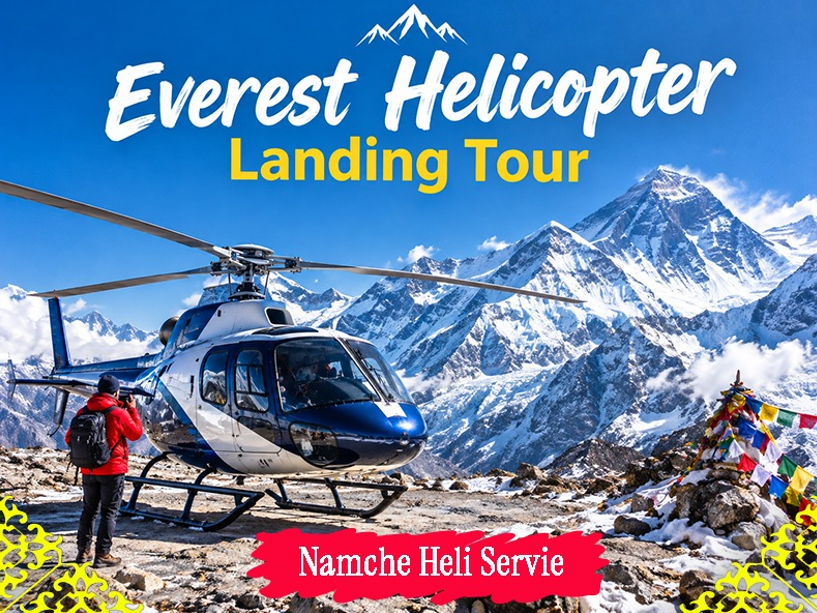
Most people who dream about Everest run into the same wall: time. The classic trek swallows the better part of two weeks, and not everyone can step away from work or family for that long. That’s the gap an Everest Base Camp Helicopter Tour tries to fill, and it’s why the idea is so tempting. But the moment you start reading itineraries, things get muddy. One page talks about Kathmandu to Lukla, another drops Lobuche into the mix, and a third promises a return flight without saying where it actually lands. So what really happens between Kathmandu, Lukla, Lobuche and the trip back? This guide takes the route one leg at a time, in plain language, so you know what you’re looking at before you commit to anything.
What Is the Kathmandu–Lukla–Lobuche Helicopter Route?
Picture a line drawn from Kathmandu into the Himalaya: first Lukla, then deeper into the Khumbu toward Lobuche, then back down the same general corridor. That’s the backbone of the route.
Kathmandu is where nearly everyone begins. Lukla is the small mountain town that works as the front door to the Everest region. Lobuche sits much higher, a cold, thin-aired spot along the path trekkers use to approach Base Camp. A helicopter tour squeezes all of this into a short stretch of time, while a trekking itinerary spreads it over many days of walking.
One thing to keep in mind from the start: the exact flight path isn’t fixed in stone. Weather, aircraft operations, landing conditions and aviation restrictions can all nudge it.
Why Lukla Is More Than Just a Stop
Lukla’s airstrip is the reason the Everest region can be reached without a long approach on foot. For helicopter travelers it’s still a key reference point between the lowlands and the high Khumbu. Depending on the itinerary, it may be a landing point or something you simply fly past, so ask which one it is for your booking.
Kathmandu to Lukla Helicopter: What Travelers Should Expect
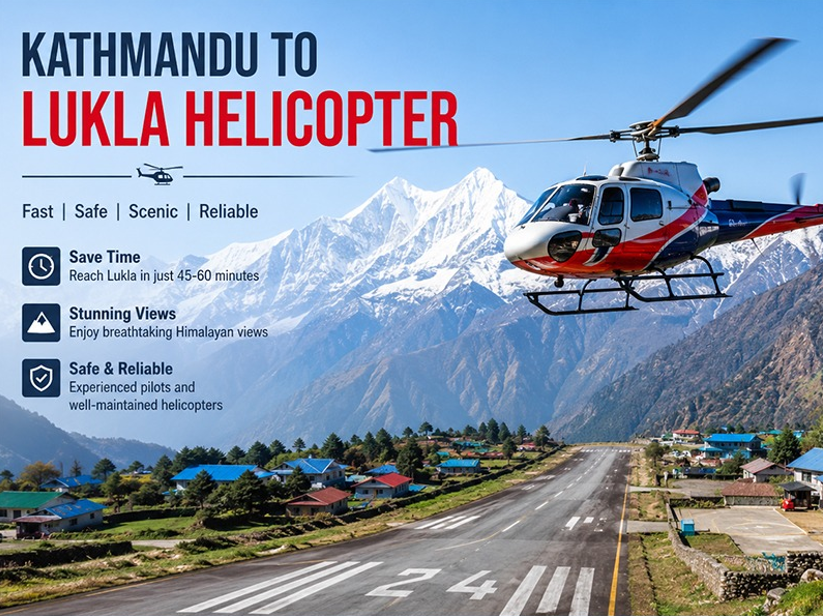
The first leg is the easiest to picture. You leave Kathmandu and head toward the Everest region, with Lukla as the first big marker. Early departures are common in mountain flying, since mornings tend to be clearer, and that’s usually why operators ask for an early start.
What catches people out is expecting a fixed timetable. Mountain weather doesn’t care about your schedule, and a Kathmandu to Lukla helicopter flight can slip or get reshuffled when visibility drops. Reaching Lukla and continuing to higher places are also two different things, because the second part depends on conditions further up. So don’t stack an important connection right after. Leave some slack.
How does the Kathmandu to Lukla helicopter flight work?
It provides aerial access from Kathmandu toward the Everest region, with Lukla serving as an important gateway before the flight continues toward higher Khumbu locations when the itinerary and conditions allow.
From Lukla Toward Lobuche: Why the Flight Gets More Complicated
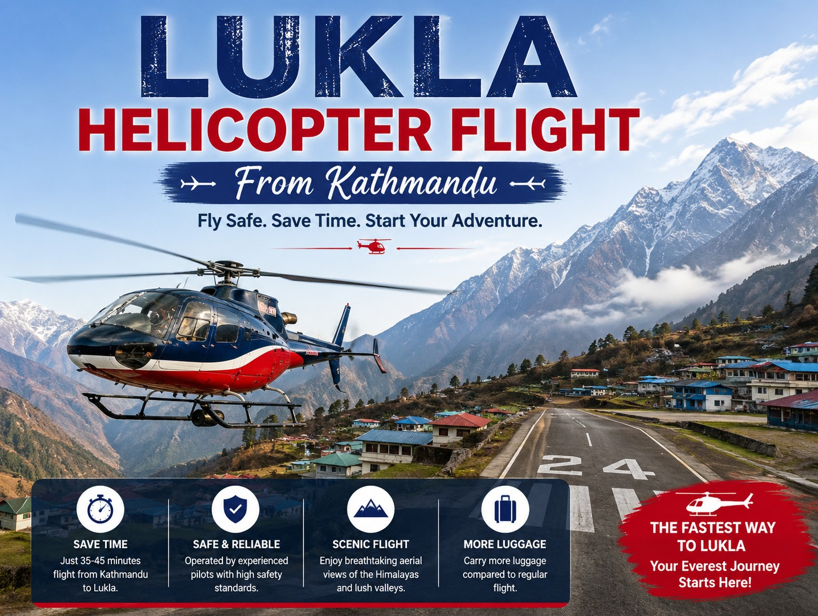
Past Lukla, the flying changes character. The terrain climbs, the valleys tighten, and the weather gets harder to read. Visibility can shift within minutes, and a clear morning can turn cloudy faster than you’d expect.
Altitude matters for the aircraft too. Thin air affects how a helicopter performs, so passenger weight and operating limits can come into play at higher landing points. That’s why this isn’t like a normal point-to-point flight. Plans may be adjusted on the day, and a good operator will tell you that upfront instead of burying it in fine print.
What Makes Lobuche Different?
Lobuche is high, and it feels like it. It’s cold, conditions swing quickly, and landing options are far more limited than around Kathmandu. Pilot judgment and live conditions decide what’s possible, not the brochure. If you’re sensitive to altitude, think honestly about that too. Once the outward journey makes sense, the return deserves its own look, especially if you’re searching for a Lobuche to Kathmandu helicopter option.
Lobuche to Kathmandu Helicopter: Understanding the Return Flight
Coming back isn’t simply the outward trip played in reverse. Weather can change over the course of the day, and a window that was open in the morning may look different by afternoon. Visibility and landing conditions at the high point affect when the helicopter can leave, and the way down may include operational stops depending on the itinerary and aviation requirements.
So when you see Lobuche to Kathmandu helicopter listed as one line in an itinerary, read it as the goal of the return, not a promise of one uninterrupted hop. Give yourself breathing room afterward. A tight onward flight the same evening is just asking for stress.
Can you fly from Lobuche directly to Kathmandu?
A helicopter can be used for return travel from the Everest region toward Kathmandu, but the exact routing and stops depend on operational, weather and landing conditions on the day.
Flight Timing, Stops and the Part Travelers Often Misunderstand
| Flight stage | Main purpose | What can affect it |
| Kathmandu → Lukla | Enter the Everest region | Weather, visibility, aviation operations |
| Lukla → higher Khumbu | Continue toward high-altitude locations | Wind, visibility, altitude, landing conditions |
| Lobuche → lower region/Kathmandu | Begin return journey | Weather, aircraft operations, landing conditions |
| Final return to Kathmandu | Complete the journey | Route and operational conditions |
Helicopter itineraries are time-sensitive, and mountain flying doesn’t run like a city taxi. Treat published timings as planning guidance, not a promise. If someone quotes a Lukla to Kathmandu helicopter time down to the minute, ask how much of it assumes perfect weather.
Weather and Altitude: What Can Change the Route?
Cloud, wind, snow or rain, and sudden mountain weather changes do most of the damage. Cloud cuts visibility, wind makes high-altitude landings tricky, and precipitation can shut things down altogether. Because conditions up there move fast, the safest call is sometimes a delay, a reroute or a different landing point. That isn’t the trip failing. It’s mountain aviation doing its job. Anyone promising guaranteed flight times is offering certainty the mountains don’t give.
What Should You Check Before Taking the Flight?
Comparing providers is where most of the confusion starts. Operators such as Namcheheli, along with others running Nepal helicopter tours, may describe similar trips in slightly different ways, so ask each of them the same questions:
- Which exact route is flown, not just what the tour is called?
- Where are landings actually planned?
- Is Lobuche a landing point, or only a reference on the route?
- What are the baggage and passenger-weight rules?
- What happens if weather causes a delay or a planned landing can’t happen?
- How much flexibility should you keep for onward travel?
Kathmandu to Lukla vs. Lobuche to Kathmandu: How the Flight Segments Fit Together
| Search term | What the traveler is usually looking for |
| Kathmandu to Lukla Helicopter | Access from the capital toward the Everest region |
| Lukla to Kathmandu Helicopter | Return transportation from the Khumbu gateway |
| Lobuche to Kathmandu Helicopter | High-altitude return travel toward Kathmandu |
| Everest Base Camp Helicopter Tour | A broader Everest-region sightseeing or landing itinerary |
These phrases can describe different parts of the same overall journey, depending on the itinerary.
Final Takeaway: Know the Route Before You Fly
The phrase “Everest helicopter tour” tells you very little on its own. What matters is where the helicopter starts, where it lands, what Lobuche actually represents in your itinerary, and how the return works. Mountain aviation asks for flexibility. Know the route first, and you’ll ask better questions before departure and understand the day a lot more clearly once you’re in the air.
See also: Golf and Travel: The Best Courses for Incredible Scenery
Frequently Asked Questions About the Everest Helicopter Route
Can I take a helicopter from Kathmandu to Lukla?
Yes, it’s a commonly discussed route. Availability and routing depend on current aviation and weather conditions, so confirm details with your operator.
How does the Lukla to Kathmandu helicopter return work?
It brings you back from the Khumbu gateway toward Kathmandu. Timing can shift with weather, visibility and aircraft operations, so don’t treat it as fixed.
Can a helicopter fly from Lobuche to Kathmandu?
Return travel from the high Khumbu is possible in suitable conditions, but the exact routing and any stops depend on operations on the day.
How long does the Everest Base Camp Helicopter Tour take?
It depends on the itinerary, landing points and operator, so no single duration fits every route. Ask for the planned stops and keep some schedule flexibility.
Can bad weather change the helicopter route?
Yes. Low cloud, poor visibility and wind can delay flights, change landing points or alter the route, because safe landing conditions come first.
Is Kathmandu to Lukla helicopter travel the same as an Everest Base Camp helicopter tour?
No. Kathmandu–Lukla is one flight segment, while an Everest helicopter tour can include extra high-altitude sightseeing or landing points.
Contact Details
———————————-
Namche Heli Service
Namche Bazzar, Solukhumbu, Nepal
(Branch Office :Kathmandu Naya Bazar)
+977-985-2850192 (WhatsApp)
Email: info@namcheheli.com
URL: www.namcheheli.com
