ByJohn A
Why Lighting Should Be Planned as Part of Your Pooja Temple Design
A home temple is often designed with considerable attention to the quality of the marble, carving, Deity placement, proportions and decorative details. Lighting, however, can sometimes be treated as something to add after the mandir has already been installed. This can limit both the appearance and everyday functionality of the prayer space.
Lighting influences how clearly the Deities can be seen, how architectural details appear and how comfortable the prayer area feels during different times of the day. It also introduces practical considerations such as electrical points, wiring, fixture placement and maintenance. Planning these elements early allows them to become part of the overall design rather than visible additions made afterwards. When planning a pooja temple for home, lighting should therefore be considered alongside dimensions, materials, layout and other fundamental design decisions.
Lighting Influences the Overall Character of a Home Temple
Lighting can significantly change how the same temple appears.
A marble mandir illuminated by soft, warm lighting can have a very different visual character from one exposed to bright overhead lighting. The direction and intensity of the light can also influence which parts of the temple naturally attract attention.
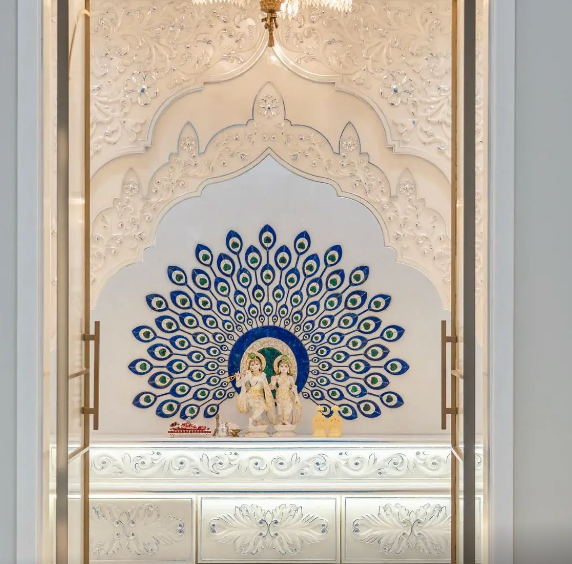
A home temple usually contains several visual layers. There may be the main deity area, a platform, pillars, arches, carved borders, a dome or decorative backdrop. Lighting can create a hierarchy between these elements instead of illuminating everything at exactly the same intensity.
The aim is not necessarily to make the temple as bright as possible. A more thoughtful objective is to provide enough illumination for everyday worship while maintaining a calm and balanced atmosphere.
The Deity Area Usually Needs Particular Attention
The central deity area is naturally the focal point of most home temples, so its lighting deserves careful consideration.
If the main light source is positioned behind or directly above the person performing pooja, shadows can fall across the deity area. Similarly, a very strong spotlight may create glare or make the space uncomfortable to look at for extended periods.
A softer, more controlled source of illumination can provide better visibility without overwhelming the surroundings.
The height and depth of the temple influence where this light should be positioned. A deeper mandir may require a different arrangement from a shallow wall-mounted design. The number and dimensions of the deities can also affect how evenly the area needs to be illuminated.
For this reason, lighting placement is easier to plan once the internal arrangement of the temple has been established.
Ambient and Focused Lighting Serve Different Purposes
Not every light around a home temple needs to perform the same function.
Ambient lighting provides general illumination across the pooja area. This may come from the room’s ceiling lights, wall fixtures or concealed sources integrated around the mandir.
Focused lighting has a more specific purpose. It may illuminate the deity area, highlight an architectural feature or draw attention to carved marble detailing.
Using the two together can create a more balanced result. Ambient light makes the space practical to use, while carefully positioned focused lighting can emphasise important elements.
This distinction becomes especially useful in dedicated pooja rooms where the temple forms part of a larger interior rather than functioning as a standalone structure in another room.
Concealed Lighting Can Keep the Design Visually Clean
Modern home temples increasingly incorporate lighting without making the fixtures themselves visually prominent.
Concealed LED strips or carefully recessed lighting can illuminate selected areas while keeping the source of the light largely out of view. For example, concealed lighting may be incorporated around a backdrop, underneath an architectural feature or within another suitable part of the temple structure.
The benefit is visual simplicity. The eye notices the illuminated marble or deity area rather than exposed fixtures and wires.
However, concealed lighting needs to be planned before fabrication and installation wherever possible. Space may need to be provided for fixtures, wiring and connections. Trying to introduce these elements later can require visible modifications that affect the finished appearance.
Lighting Can Reveal Marble Carving and Architectural Details
Carved marble responds particularly well to directional lighting because light and shadow can reveal the depth of the craftsmanship.
Pillars, floral motifs, arches, borders and other carved features may appear relatively flat under uniform frontal illumination. When light reaches them from a considered angle, small shadows form around the carved surfaces and make the detailing easier to appreciate.
The effect does not require extreme brightness. Subtle differences between illuminated and shadowed areas can be enough to reveal depth.
This is one reason lighting should be considered alongside the level of carving in the temple. An intricately carved traditional mandir may benefit from a different lighting approach from a contemporary temple with cleaner surfaces and minimal ornamentation.
The illumination should support the design language rather than compete with it.
Light Colour Can Change How Marble Appears
Colour temperature is another important consideration.
Warmer lighting can create a softer atmosphere and introduce warmer tones to the appearance of white marble. Cooler light can make the same material appear crisper and sometimes more neutral or slightly bluish.
Neither is automatically correct for every home.
The surrounding interior should also be considered. A temple positioned within a living room that predominantly uses warm lighting may look disconnected if its illumination is dramatically cooler than everything around it.
Consistency can help the mandir feel integrated into the wider interior while still maintaining its own identity.
Where possible, testing the intended light against the actual marble or material before finalising the installation can provide a clearer idea of the finished appearance.
Excessive Brightness Can Work Against the Design
More lighting does not necessarily create a better pooja space.
Too many bright fixtures can flatten architectural details, create glare and make the mandir visually overwhelming. Reflective marble surfaces may further intensify poorly positioned light.
A useful approach is to think in layers rather than simply increasing brightness. The deity area may receive one level of illumination, architectural features another and the surrounding room a softer general light.
Dimmers can provide additional flexibility where appropriate. The temple might need brighter illumination while arranging or cleaning the space but softer lighting during evening prayer.
Planning for different uses can make the lighting system more adaptable.
Electrical Points Should Be Planned Before Installation
One of the most practical reasons to plan lighting early is electrical access.
If the location of the temple is already known, electrical points can be positioned accordingly. This can reduce the need for extension cables, exposed sockets or wires running visibly across the wall.
For a custom pooja temple for home, electrical requirements can also be coordinated with the temple dimensions. The location of switches, sockets, drivers and other components can be considered before the structure is installed.
This becomes especially important when the mandir incorporates lighting within the structure itself.
A visually elegant temple can quickly lose some of its impact if electrical cables have to be routed externally because suitable provisions were not made beforehand.
Wiring Should Remain Accessible
Concealing wires is desirable, but making them permanently inaccessible can create another problem.
Lights, drivers, connectors and other electrical components may eventually need maintenance or replacement. The design should therefore balance concealment with practical access.
A small removable panel or another discreet access point can make future maintenance much easier than dismantling part of the temple.
This consideration is particularly important for built-in or floor-to-ceiling designs. Once these structures are installed, accessing electrical components behind them may be difficult unless maintenance has been considered from the beginning.
Good lighting design therefore includes not only what the illumination looks like today, but how the system can be maintained later.
Diya Placement Should Be Considered Alongside Electrical Lighting
Electrical illumination is only one source of light within many pooja spaces.
Traditional diyas may form an important part of daily worship. Their location should be considered separately because an open flame introduces heat, smoke and fire-safety considerations.
A diya should have a stable and appropriate surface with sufficient clearance from combustible decorative elements, wiring and electrical fittings. Local fire-safety guidance and the characteristics of the surrounding materials should always be considered.
Its visual role is different from electrical lighting as well. A diya creates a small, warm and naturally changing source of illumination.
Planning the two together can prevent electrical fixtures from being positioned where they interfere with the practical use of the pooja area.
Compact Temples Need Particularly Careful Lighting
Lighting becomes especially important when the mandir is located in a small apartment or incorporated into another room.
A compact temple has less distance between the light source, marble surface and deity area. A fixture that would appear subtle in a large pooja room may feel disproportionately bright within a small enclosure.
Space for concealing wiring is also more limited.
Compact designs therefore benefit from restrained lighting. A carefully positioned source may achieve more than several visible fixtures.
The lighting should also be considered in relation to the room containing the temple. If the mandir is integrated into the living or dining area, it should remain visually distinctive without becoming so bright that it dominates the entire room.
Dedicated Pooja Rooms Allow More Layered Lighting
A dedicated pooja room provides greater flexibility because the lighting can be designed for the entire space rather than only the temple structure.
General ceiling illumination can make the room practical, while focused lighting can emphasise the mandir. Additional concealed lighting may be used around architectural details where appropriate.
The room can also be planned around natural daylight.
If windows provide strong daytime illumination, artificial lighting may primarily be required in the evening. If the room receives limited daylight, general illumination becomes more important throughout the day.
Considering natural and artificial light together can prevent unnecessary fixtures and create a more balanced environment.
Lighting Should Complement Rather Than Dominate
Decorative lighting can add visual interest, but the lighting itself should not become the primary feature of the pooja space.
The focus should remain on the deity area and the architectural character of the mandir. Excessive colour-changing lights, highly visible fixtures or complicated lighting effects can distract from the calm character many people want from a prayer space.
This does not mean a home temple must avoid contemporary lighting techniques. Concealed LEDs, focused illumination and modern controls can work successfully when used with restraint.
The key is ensuring that technology supports the design rather than defining it.
Plan Lighting at the Same Time as the Temple
Lighting decisions become easier when they are made alongside the broader design.
Once the location, dimensions, deity arrangement, marble detailing and architectural features are established, the designer can identify where illumination is genuinely useful. Electrical points and wiring routes can then be incorporated before installation.
This integrated approach can also reduce unnecessary changes later.
For example, a backlit panel may require additional depth. Concealed LEDs may need channels or recesses. Focused lighting may need to be positioned according to the exact height of the deity platform. These requirements are easier to accommodate during design than after fabrication is complete.
See also: Vitaros Cream: A Complete Guide to Alprostadil for Erectile Dysfunction
Conclusion
Lighting is more than a decorative finishing touch for a home mandir. It influences deity visibility, the appearance of marble, the depth of carved details and the overall atmosphere of the prayer space. It also affects practical decisions involving wiring, electrical points, fixture access and maintenance.
When planning a pooja temple for home, lighting should therefore be considered alongside size, proportions, deity placement and architectural style. Ambient illumination can provide general visibility, focused lighting can emphasise important areas and concealed fixtures can help maintain a clean appearance.
The most effective lighting does not necessarily attract attention to itself. Instead, it helps the temple look balanced, makes everyday worship more comfortable and allows the materials and craftsmanship of the mandir to remain the central visual focus.